GloboidalDRIVE™ GEAR ACADEMY

Double enveloping wormgear drives provide increased working capacity momentum, improved precision and long life compared to other wormgearing technologies.

The worm gear concept has originated in ancient times. Archimedes is often known as the inventor of wormgearing by rotating a wormgear with a worm. Leonardo da Vinci envisioned the double enveloping worm gearing about 500 years ago. Although Leonardo da Vinci introduced the double enveloping worm gears as a concept, effective techniques were developed in the late 1920s production-wise.

There are three different types of worm gear systems: Non-concave worm gear, single concave worm gear, double concave worm gear:

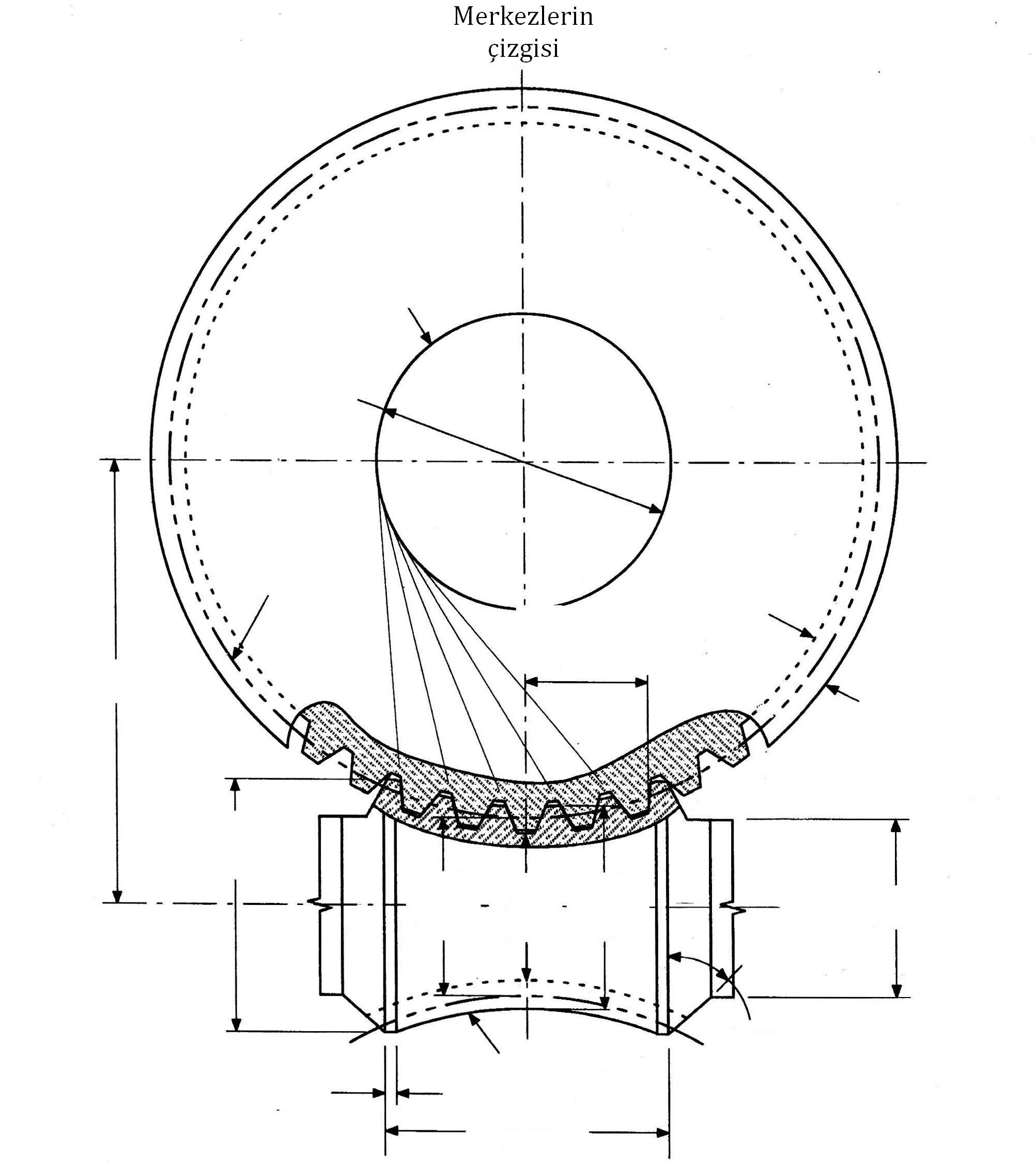
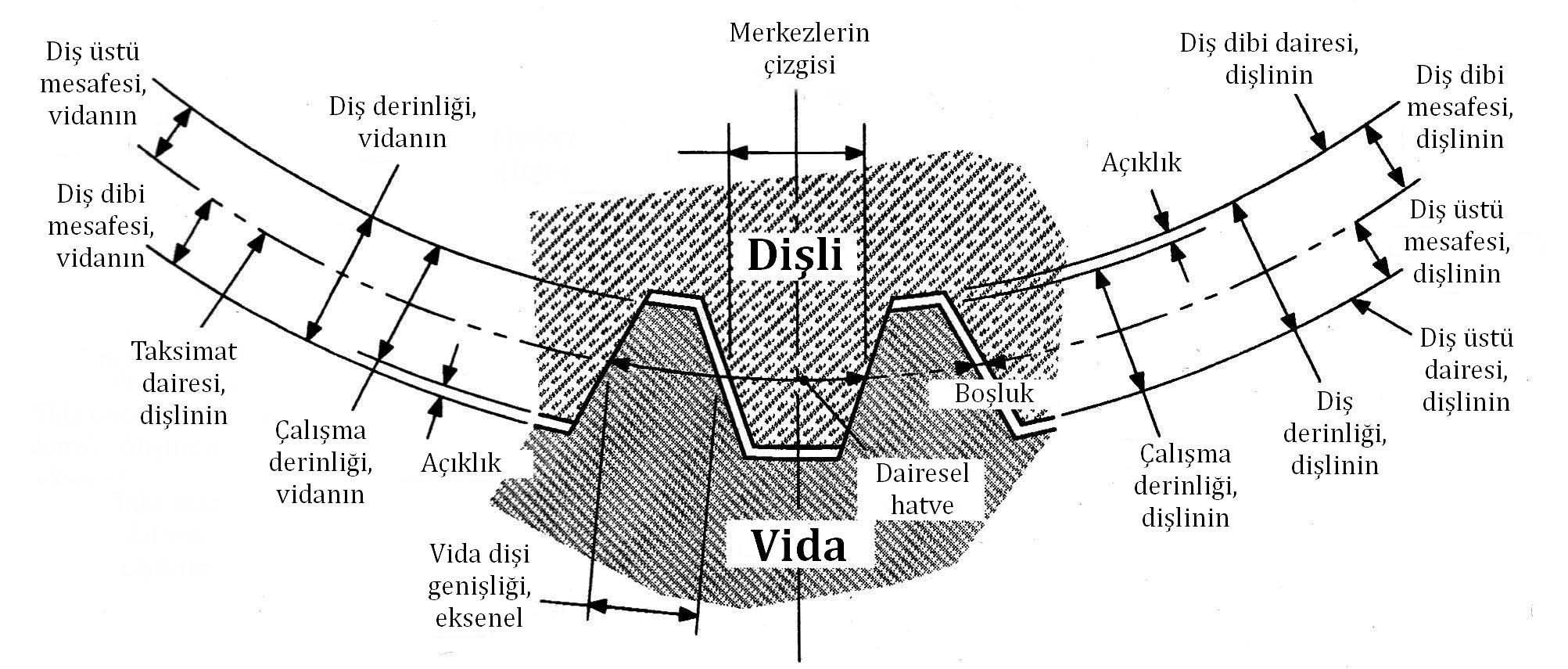
In non-concave worm gears, neither the worm nor the wormgear are enveloped and are in spur form. In the single concave system, generally one element (worm gear) is concave and envelops the screw. In the double concave system, both screw and gear are concave and envelop each other.

Double enveloping wormgear drives have several key advantages over other wormgearing systems. In cylindrical worm gear system, only one or two gear teeth are in contact with the worm. Each tooth in contact has a particular single contact line that will provide contact half its width.

In double enveloping worm gear systems, the number of gear teeth in contact with the worm is higher, as well as the contact surface of each tooth in contact.

The contact surfaces between the worm and wormgear teeth are linear. These contact lines move along the surface of the gear tooth and this process continues as long as envelopment continues. The contact lines of the double enveloping wormgear drives are designed to increase the power transmission capacity and reduce the tension on each tooth. Each tooth in contact has a single line  that will provide contact half its width.

In the wormgear rotated in contact with the worm on its own curve, the contact line passes from the end of the gear tooth to the bottom.

The contact line is approximately aligned in the sliding direction of the worm. When the gear tooth is rotated on the worm in the direction of its spring, one of the contact lines is formed at the center of the tooth. The other line of contact starts to move from the left to the center. In the time until the end of tooth movement, these two contact lines turn into a single line in the center. The contact lines are approximately vertical in the sliding action of the worm tooth.

The benefits of double enveloping design are dramatic.

Firstly; The total load is divided between more teeth and the load on a single tooth is spread over the two contact lines. This magnificent load spread significantly increases the load carrying capacity. Second, the same amount of torque can be generated by using smaller gearboxes.

The double enveloping wormgearing system is based on the single tooth form concept. All double enveloping gears have a concave and spur surface form, unlike other tooth forms, and worm threads are also tangent to this form in the common main circle.

LUBRICATION

Increasing the number of wormgear teeth in contact with the worm reduces the load at any point on each wormgear tooth and improves lubrication. In addition, two contact lines in each wormgear tooth spread the load and improve lubrication. And the verticality of these load lines better penetrate the surface in accordance to the ratio of wormgear teeth and screws. Due to the angle in which the contact starts and ends, the lubricant will be moving for a very short time as far as the width of the contact line. On the other hand, in conventional cylindrical wormgear drives, the contact lines are parallel to the direction of action. This parallel allows metal-to-metal contact and is not desired.

BACKLASH

The backlash in wormgear drives is often described as the mating game between the teeth. The double enveloping wormgear drives have way lower amounts of backlash compared to other cylindrical wormgear drives. Therefore, it provides extremely high accuracy in the ratio of rotation compared to a cylindrical worm gear. This is very important in applications where precision is important, such as packaging machines, printing machines, metal cutting and forming machines.

ADVANTAGES

The benefits of this double enveloping design are dramatic. First of all; The total load is divided between more teeth and the load on a single tooth is spread over two contact lines. This magnificent load spread significantly increases the load carrying capacity. Second, the same amount of torque is produced by using smaller gearboxes. The double enveloping wormgear system can easily carry as much load as the heavier and larger cylindrical worm gear system.

    error: Content is protected.